
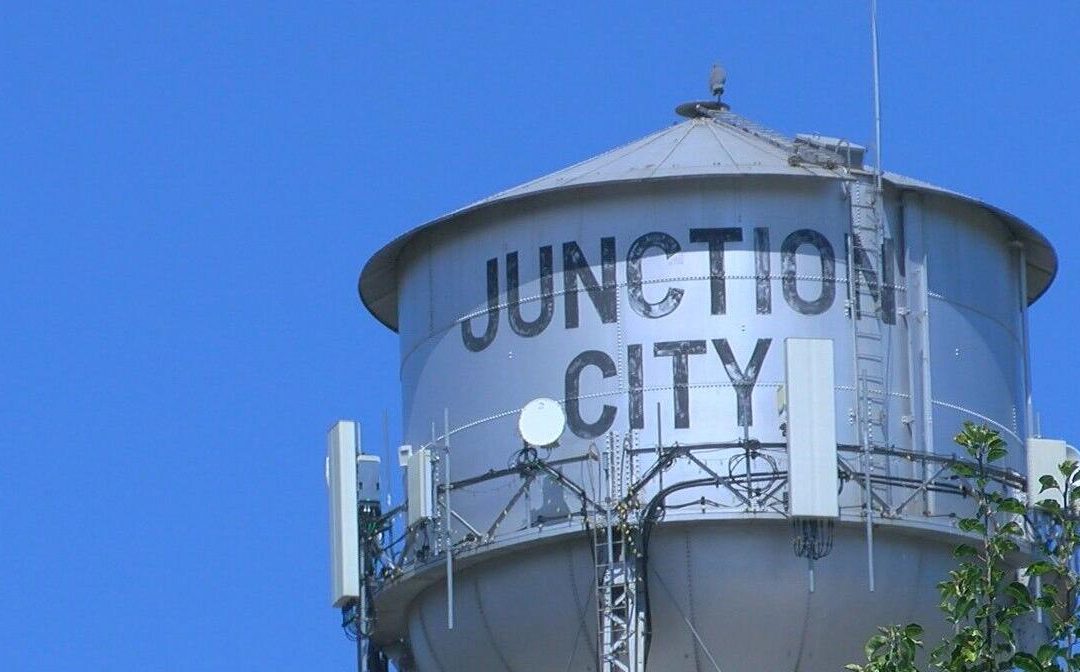
Published November 13, 2026
Junction City sought significant funding for the Raintree Water Treatment Plant design, including a 2025 request for nearly $1 million in principal forgiveness. These efforts aimed to resolve critical water supply shortfalls and treat high levels of iron and manganese in new wells.
Securing a reliable flow of clean water is a fundamental challenge for many smaller municipalities in the Willamette Valley. For the city of Junction City, this struggle culminated in a series of infrastructure projects and funding requests aimed at stabilizing its municipal supply. The efforts centered on the development of the Raintree well and the design of a dedicated treatment facility to ensure the long-term health of the city’s distribution network.
The Raintree Project and Junction City Water Treatment
The city of Junction City, described as a rural, distressed Lane County community with a population of 6,747, has faced significant hurdles in maintaining its water infrastructure. To support its residents and businesses bordering Eugene, the city initiated the Raintree Water Treatment Plant design project. This project was conceived not just as an expansion, but as a necessary intervention to prevent further degradation of the city’s water delivery capabilities.
The Junction City Water Treatment strategy involved moving beyond its existing five main production wells and one emergency well. While the city previously relied on a Loprest filtration system to remove minerals, the increasing demand and declining well performance necessitated a more robust, modern approach to treatment and production.
Funding Sources and the 2025 BIL-EC Request
Funding for such large-scale infrastructure is rarely simple for rural cities. In April 2025, the Oregon Infrastructure Finance Authority issued a memorandum regarding a substantial funding request. This request utilized the Bipartisan Infrastructure Law Emerging Contaminants (BIL-EC) program, which provides critical financial relief for communities facing water quality challenges.
| Detail | Project Information |
|---|---|
| Funding Request Amount | $999,181 |
| Project Number | 188-16193 |
| Request Type | Principal Forgiveness |
| Project Focus | Raintree Water Treatment Plant Design |
It is important to note that this specific request was categorized for the design phase of the project. Principal forgiveness is a vital tool for distressed communities, as it allows the city to improve its infrastructure without adding an unsustainable debt burden to its residents.
Addressing the Water Supply Shortfall
The urgency behind these funding requests became clear during the water crisis of 2023. By August 24, 2023, Junction City had spent five weeks under a Stage 2 emergency water notice. The situation was dire: all four of the city’s primary wells were underproducing. The combined output of the system had plummeted from a standard 2,200 gallons per minute to just over 600 gallons per minute.
To combat this shortfall, city officials took immediate action. During the winter of 2023, when summer water demand typically drops, officials scheduled a comprehensive evaluation of the wells. This included pulling and inspecting at least one well to determine if mechanical failures or geological shifts were responsible for the drop in production.
The Challenge of Iron and Manganese
While the volume of water was a primary concern, the quality of the water from new sources presented its own set of technical challenges. Preliminary analysis of the new wells revealed significant concentrations of iron and manganese. Specifically, test data from one new well showed iron levels at 3.21 mg/L and manganese levels at 0.1 mg/L.
These contaminants are not merely aesthetic issues. Untreated iron and manganese can lead to several systemic problems:
- Pipe Accumulation: Minerals build up inside the water mains over time.
- Reduced Diameter: As deposits grow, the effective diameter of the pipes decreases, which directly reduces water pressure for residents.
- Increased Maintenance: The city faces higher operation and maintenance expenses to clear lines and repair damaged equipment.
- System Lifespan: The overall lifespan of the distribution system is shortened when these minerals are allowed to circulate untreated.
Timeline of Well Development
The path toward the Raintree facility began long before the 2025 funding request. Starting in 2021, the city began working on the Alderdale and Raintree test wells. These sites were identified as potential sources to replace or supplement the failing production wells.
In April 2023, the city officially began the water-rights transfer process for both the Alderdale and Raintree wells. By late August 2023, work was underway to make the Raintree test well produce water, with the goal of completing work on both test wells by the end of that month.
Financial planning for these wells was a fragmented process. While the Alderdale and Raintree wells were each estimated to cost approximately $1.3 million to develop, only the Raintree well had secured funding in the early stages. The city worked with USDA Rural Development on a $1 million grant for the Raintree well, which was anticipated for award by October 2023, with a projected entry into service in 2024.
Infrastructure Goals and Implementation Gaps
The overarching goal for the city remained the restoration of production capacity to 2,200 gallons per minute. Achieving this required a combination of correcting existing well failures and expanding the system through the Raintree project.
However, there is a notable gap in the public record regarding the transition from design to construction. While the 2025 memorandum clearly documented the request for design funding, we could not verify a confirmed 2026 construction start date from public sources. The timeline for moving from a funded design to a broken-ground construction site often depends on the speed of grant approval and the availability of contractors.
For residents who wish to attend city council meetings to ask about these timelines, navigating to city hall can be made easier by checking for LTD service changes, especially during the transition to fall schedules, to ensure reliable transit to civic forums.
Community Impact and Next Steps
The Raintree well and its associated treatment plant represent more than just pipes and pumps; they are the foundation of Junction City’s future stability. Without a reliable water supply, residential growth and business investment in the area would be severely limited.
As the city moves forward with its design plans and seeks further principal forgiveness, residents are encouraged to stay engaged with local government. For those interested in broader civic updates or community gatherings, checking Lane County events is a great way to find forums where infrastructure and urban planning are discussed.
The journey from the 2023 water crisis to a fully operational Raintree plant highlights the complexities of rural infrastructure management. While the design funding marks a critical step, the community continues to watch for the official transition into the construction phase.
Frequently Asked Questions
What was the purpose of the 2025 funding request?
The city requested $999,181 in Bipartisan Infrastructure Law Emerging Contaminants funding for the design of the Raintree Water Treatment Plant.
Why does Junction City need new water treatment design?
Preliminary analysis of new wells showed significant iron and manganese problems, which can reduce pipe diameter, lower water pressure, and increase maintenance costs.
What was the water production crisis in 2023?
In August 2023, combined well output fell from 2,200 gallons per minute to just over 600 gallons per minute, leading to a Stage 2 emergency water notice.
Sources
For more information, see: