
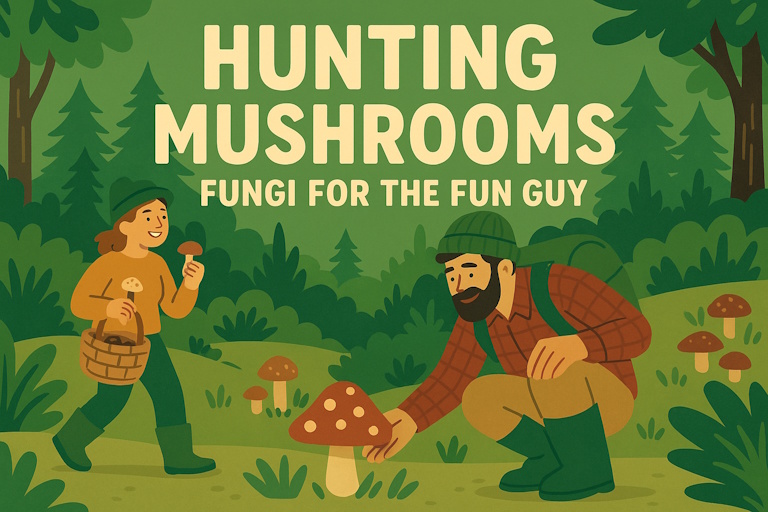
🍄 How to Forage Safely for Mushrooms in Lane County Forests (Plus Local Swap & ID Clubs)
Picture this: you’re walking through a damp Douglas-fir forest, morning fog still hanging low, and suddenly you spot them—fat, golden chanterelles poking out like little nuggets of edible treasure. This isn’t just a hobby. For many in Lane County, mushroom foraging is practically a competitive sport, a seasonal pilgrimage, and—if you listen to some folks—a mystical experience where the forest reveals her secrets to those patient enough to look.
But before you grab a basket and your Instagram account, let’s get something straight: mushroom foraging is equal parts wonderful adventure and potential gastrointestinal nightmare. Eat the wrong one, and you’re not getting “earthy umami flavors”—you’re getting a trip to PeaceHealth.
So, let’s dive into how to forage mushrooms safely and joyfully in Lane County, where to learn more, and why fungi here aren’t just food, they’re culture. Get our free Ebook.
🌲 Why Lane County is Mushroom Heaven
Lane County is a mushroom hotbed (in the best sense of the word). Thanks to our temperate climate, wet winters, and a diversity of forest ecosystems—from Coast Range spruce stands to high-elevation firs—we’re practically a fungal paradise.
According to a moveBuddha study, Lane County ranks among the top counties in the U.S. for mushroom foraging. Add in a thriving community of clubs, festivals, and experts, and you’ve got yourself a fungi playground.
Every fall, the Mount Pisgah Arboretum Mushroom Festival draws thousands of people to ogle and learn about hundreds of mushroom species. Meanwhile, the Cascade Mycological Society (CMS) hosts classes, forays, and even citizen science projects cataloging fungi in urban mulch piles. In short: this isn’t a niche hobby here. It’s a Lane County rite of passage.
🍄 Mushroom Species to Know (and Respect)
There are literally hundreds of edible mushrooms in Oregon, but let’s spotlight a few of the local all-stars you’re most likely to encounter (and actually want to eat):
1. Chanterelles (Cantharellus species)
-
Season: Late summer through fall.
-
Where: Doug-fir forests, often growing in clusters.
-
Look: Trumpet-shaped, golden-yellow, with false gills (blunt ridges that run down the stem).
-
Why they rock: Firm, meaty texture with a fruity, apricot aroma. The gold standard of Oregon mushrooming.
Funny note: You’ll think you’ve struck gold… until you realize everyone else in the forest had the same idea.
2. Morels (Morchella species)
-
Season: Spring, especially after wildfires in the Cascades.
-
Where: Burn sites, riverbanks, and under cottonwoods.
-
Look: Honeycomb-like, with a pitted cap fully attached to the stem.
-
Why they rock: Rich, earthy, and beloved by chefs.
Safety tip: False morels exist and they will ruin your day. If the cap hangs free from the stem, or looks like a brain, back away slowly.
3. King Bolete (Boletus edulis, aka Porcini)
-
Season: Fall.
-
Where: Mixed forests, often under conifers.
-
Look: Chunky, brown cap with a thick white stalk. Spongy underside instead of gills.
-
Why they rock: Nutty flavor, fantastic dried, and Italians weep with joy when they see one.
Downside: Worms love them too. Slice before you brag.
4. Oyster Mushrooms (Pleurotus species)
-
Season: Year-round, especially on decaying alder and cottonwood logs.
-
Where: Dead or dying wood in moist forests.
-
Look: Fan-shaped caps, often in layered shelves.
-
Why they rock: Mild, versatile, and ridiculously photogenic.
Bonus: They look like something out of a Studio Ghibli movie.
5. Death Cap (Amanita phalloides)
-
Season: Fall.
-
Where: Often under ornamental oaks (sometimes in neighborhoods).
-
Look: Greenish-yellow cap, white gills, bulbous base.
-
Why to run: One bite can kill you. Seriously.
Rule of thumb: Never, ever mess with Amanitas unless you’re an expert. Your life isn’t worth the Instagram likes.
🧺 Foraging Basics: How Not to Poison Yourself
-
Invest in a good guidebook – The Mushrooms of the Pacific Northwest by Trudell and Ammirati is a local bible.
-
Learn from experts – Join the Cascade Mycological Society (CMS) or attend the Pisgah Festival. Walks with experienced foragers are worth a hundred YouTube videos.
-
Take only what you know – “When in doubt, throw it out” is the golden rule. Don’t play mycological roulette.
-
Harvest carefully – Use a knife to cut at the base. Don’t yank; it damages the mycelium.
-
Carry in a basket, not plastic bags – Mushrooms need airflow or they’ll slime out on you.
-
Don’t overharvest – Leave some behind. The forest provides, but only if we respect it.
🧑🤝🧑 Community, Swaps & Clubs
Foraging isn’t just about food—it’s about community. In Lane County, you’ll find plenty of mushroom nerds ready to share tips, swap species, and show off photos.
-
Cascade Mycological Society (Eugene) – Hosts monthly meetings, workshops, and field trips.
-
Mount Pisgah Arboretum Mushroom Festival – Lane County’s biggest fungi celebration each October.
-
Local Facebook groups & swap clubs – “PNW Mushroom Foraging & Identification” has over 66,000 members online, with many Lane County foragers sharing their finds.
These communities aren’t just fun—they’re lifesaving. Post a pic, and someone will tell you instantly if you’ve picked dinner or doom.
🍳 Processing and Cooking Mushrooms
Freshly foraged mushrooms are a bit like adopted puppies—they need some care before they’re ready for your home.
-
Clean gently – Use a brush or damp cloth. Don’t soak—mushrooms are sponges.
-
Slice and inspect – Especially boletes. Worms love them as much as you do.
-
Cook before eating – Almost all wild mushrooms should be cooked to improve digestibility and flavor.
-
Preserve for later – Dry morels and porcini for stews, or sauté chanterelles and freeze them in butter.
🌱 History & Culture
Mushroom hunting in Oregon isn’t new—it’s a tradition with deep roots. Indigenous communities have long foraged fungi, and in modern times, mushrooming has grown into both an outdoor hobby and a multimillion-dollar informal economy. Oregon’s wild mushroom trade is worth an estimated $40 million annually.
That means your little forest stroll connects you to a huge web of history, culture, science, and, yes, money.
😂 The Humor of Mushrooming
-
You will definitely get lost at least once. (Pro tip: bring GPS, not just vibes.)
-
You will be out-hunted by a 70-year-old in rain boots who knows every stump in the woods.
-
You will think you’ve found chanterelles, only to realize you’re holding a sad clump of Jack-O’-Lanterns (glow-in-the-dark and very poisonous).
Laugh it off—it’s all part of the fun.
🎯 Final Thoughts
Foraging mushrooms in Lane County is a blend of treasure hunting, science, and comedy of errors. The rewards? Fresh, delicious food, a deeper connection to the forest, and a community of like-minded explorers.
Stay safe, respect the land, and remember: when in doubt, throw it out. Your stomach will thank you.
Want a free Ebook on Mushroom Hunting? Get it here.